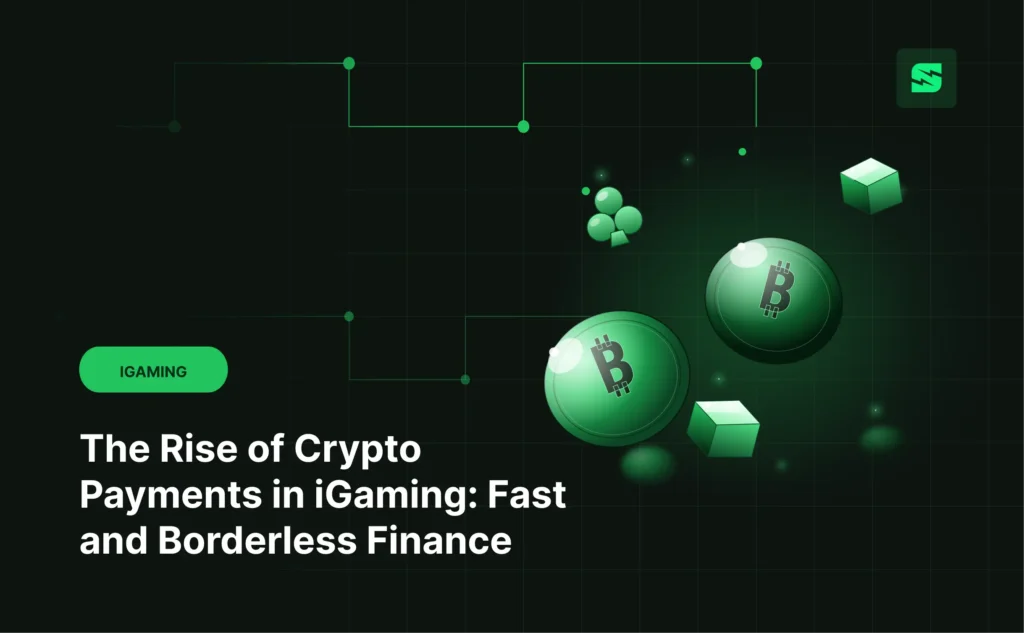
As gaming becomes increasingly global, online gaming payment solutions haven't kept pace. Players still face delays, unexpected debits, and limited payment options, making payment processing a key part of the player experience. Crypto payments offer a faster and more borderless alternative, helping iGaming operators simplify deposits and withdrawals while giving players more flexible payment options.
This article explores how crypto payments are changing iGaming, their main benefits and challenges, and what they mean for operators and players.
Why iGaming and traditional banking were never a good match
| Where it gets complicated | Why banks struggle with it |
|---|---|
| Cross-border payments | Different rules, currencies, and payment routes |
| Chargebacks | Higher risk of disputes and payment reversals |
| KYC & AML | Gaming adds extra checks on top of standard banking compliance |
| Fast withdrawals | Traditional banking isn't built around instant player payouts |
| Regulation | Gambling rules can vary sharply between markets |
Why traditional banking failed iGaming
Traditional banking systems were never designed for the iGaming industry. They often struggle with compliance, especially KYC and AML in online iGaming. In most cases, players have limited access to banking solutions or encounter delays, additional fees, or even failed transactions.
Blocked transactions
Banks can block transfers for various reasons, including policies, guidelines, rules, or regulations. You might even have enough funds in your account for the transaction, but you still cannot transfer or withdraw funds.
5-day withdrawal queues
Withdrawals may take days to process through the conventional banking system. This may disrupt the overall online gaming experience, since players may want faster withdrawals.
Hidden currency fees
When players make transactions in different currencies, they may incur additional currency conversion fees. These fees are not always disclosed in advance but can reduce your total payout.
Card declines at checkout
Card payments may be declined when players try to make deposits. Payment declines affect the entire checkout process, forcing players to find alternative payment methods.
Which crypto should you use?
| Crypto | Best for | Why use it |
|---|---|---|
| Bitcoin (BTC) | Large deposits | Widely accepted and highly liquid |
| Ethereum (ETH) | Flexible payments | Strong ecosystem and broad support |
| USDT/USDC | Everyday transactions | Stable value without crypto price swings |
| Litecoin (LTC) | Smaller payments | Low fees and relatively fast transfers |
How crypto payments work
With cryptocurrency and digital currency payments, users can enjoy greater liquidity when topping up, withdrawing, or transferring virtual assets from their digital wallets without using banking services. This is one of the key advantages covered in iGaming payment systems explained.
- Setting up your wallet
Players create a crypto wallet that supports their chosen currency, including stablecoins. This wallet provides an address for conducting transactions.
- Making your first deposit
Select cryptocurrency as your payment method, specify your currency, then transfer funds to your wallet address.
- Gas fees and confirmations
Cryptocurrency transactions always involve a gas fee. We must confirm transactions on the blockchain before we credit funds.
- How withdrawals actually process
When you request a crypto withdrawal, we withdraw your funds directly from your wallet; after confirmation, you can use your cryptocurrency.
Speed and borderless play
Payment speed is important to iGamers. Cryptocurrencies are faster for cross-border payments than any other system.
Crypto vs bank transfer times
Cryptocurrency transactions, including stablecoins, are always faster compared to bank transfers. This can help if you need quick deposits/withdrawals.
Why speed varies by platform
Cryptocurrency transactions do not always happen quickly. Processing time may depend on your platform or the number of required confirmations.
Playing from restricted countries
Crypto can make international transactions easier, but it does not exempt you from compliance with your country's gambling laws and all pertinent regulations.
No conversion fees, no blocks
Cryptocurrency can help you avoid currency conversion and banking restrictions often associated with finance. However, depending on what type of cryptocurrency you use, you may still incur costs in forms of network transaction fees.
Privacy and security
Privacy is one reason people choose crypto payments. However, crypto payments do not provide complete transaction anonymity. You should know what information is visible on the blockchain.
Pseudonymous vs anonymous
Cryptocurrencies are typically pseudonymous and not anonymous. Transactions may be linked to addresses, but not to the person making the transaction.
What your wallet address reveals
Your wallet address can reveal transaction history and fund movements on the blockchain. Anyone with access to this address can easily view this publicly available data.
Provably fair gaming explained
Players can verify fair play using a method that ensures provable fairness. Using verifiable data, this system confirms results cannot be altered after they are generated.
How to verify results yourself
Players can verify results using information provided by this platform. This lets them ensure results correspond with the principles of “provable fairness.”
Ready to Start Your Project?
Turn your idea into reality with expert support. Our team delivers full-cycle development.
Where crypto iGaming is headed
Cryptocurrency-based payment solutions are likely to play an increasingly important role in iGaming as payment technologies persist to evolve. Improved networks, lower fees, and digital loyalty programs can make cryptocurrency-based gambling more convenient.
Layer 2 and near-zero fees
Layer 2 networks improve transaction performance and lower network costs. This makes smaller transactions easier.
Micro-betting and instant settlement
Lower fees and fast transactions would make smaller betting stakes more affordable. Fast settlements would also deliver funds more quickly after a bet is placed.
NFT loyalty programs
With NFT technology, game platforms can implement loyalty programs for gamers that comply with industry-standard guidelines. Users will earn digital tokens for their loyalty or membership in the platform.
CBDCs - threat or opportunity
Stablecoins and CBDCs could become another payment system option for the iGaming industry in this digital environment. CBDCs can enable fast, well-organized payments; however, their use could also threaten cryptocurrencies.
Conclusion
Cryptocurrency payments—particularly those made with virtual assets such as stablecoins or digital currencies—are rapidly changing how deposits, withdrawals, and money transfers are processed in iGaming, showing their growing popularity as a dynamic, borderless payment instrument that helps guarantee compliance with regulatory rules in blockchain in iGaming 2026.
FAQ
Is crypto gambling legal in my country?
Legality of cryptocurrency gambling in your country depends on your country’s laws and, in some cases, on your region of residence. Complying with local laws is vital, as gambling and cryptocurrencies aren't always uniformly regulated. In some countries, online gambling is permitted, but cryptocurrency use is restricted, while in others, specific rules apply to licensed cryptocurrency gambling platforms. Therefore, before making a deposit, it is recommended that you verify whether it is legal for you to use a cryptocurrency gambling site.
Which coin has the lowest deposit fees?
Network fees depend on your cryptocurrency of choice and which blockchain you’re using. Some blockchains offer low-cost, fast transactions and suit small amounts and frequent transactions. Network fees may vary based on current network traffic and which exchange or casino processes your transaction.
Can I stay anonymous playing with crypto?
Using crypto doesn’t provide 100% anonymity, but blockchain technology is mostly pseudonymous. This means a transaction can be identified by a specific wallet address, even if a name isn’t registered on the blockchain. On the other hand, some casinos that use cryptocurrency may require you to provide your identity because of licensing, local laws, or deposits made/withdrawn.
What if I send to the wrong wallet?
In most cases, you can't reverse a cryptocurrency transaction after it's confirmed on a blockchain. If you sent cryptocurrency to the wrong wallet address, you may not be able to recover your funds unless someone else returns them. In some cases, services may be unable to recover funds that were sent via the wrong network or to incorrectly specified addresses.
How do I know a casino is provably fair?
To be considered “provably fair,” a casino needs to give explicit information on how results are generated within their games. They have to make their algorithms and/or random number generation process known. They must offer a way to verify the data and confirm that results were produced according to their rules. This ensures players can verify that game results are produced based on the rules, not the casino’s word.
Crypto Payments in iGaming
Faster payments, fewer borders, more flexibility.