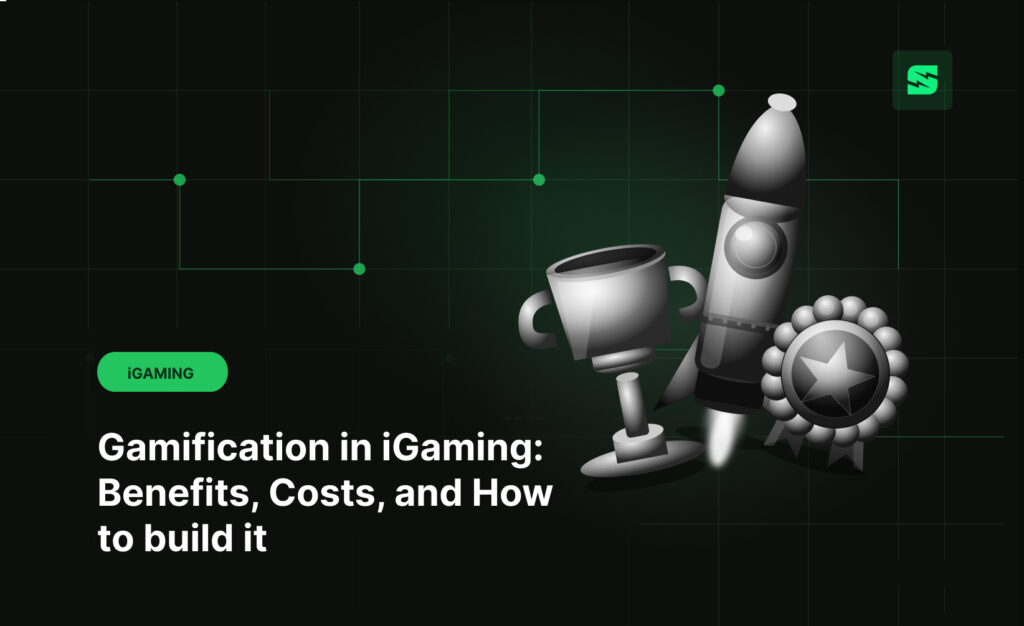
The iGaming brands that will rule the market of the future are not the brands that offer the widest variety of games. The winners are those who will create the routine of depositing money every day. Gamification is the key to doing that.
The point of gamification is not limited to aesthetics, which makes it valuable to investors and company founders. This manual will help you understand the advantages of using gamification in your business and the costs of implementing it.
Why player retention is the biggest challenge in iGaming
Customer engagement in the iGaming industry trends is an expensive undertaking. And retaining the customer is even more complicated. There are several explanations for this:
- Same old games. Many sites have the same exact games and providers. That way, there's nothing to keep people loyal to one particular site.
- Loyalty through promotions. People come because of the promotion, but they'll leave once a better promotion pops up elsewhere.
- Play with no cycle of engagement. There is no goal or progression involved, so people won't really remember the game experience.
That is precisely the reason why gamification is so important. It offers players a reason to come back, regardless of their past results.
What is gamification in iGaming?
Gamification in this industry entails applying gaming concepts, challenges, awards, leaderboards, and status within the context of players’ engagement with the platform, not the games.
Effective gamification starts with the core drivers of player motivation — not by bolting points and badges onto your platform and hoping they stick.
In simple terms, gaming changes the nature of competition from offering games to players to competing over the attractiveness of the gaming experience.
How gamification works: core mechanics
Gamification is not simply a single element but rather a system of interconnected processes that affect specific cognitive elements. That's how the main five factors operate and why they are important for your profitability.
Points and loyalty currencies
Points form the basis of the game's economic structure, with players earning points for placing bets, depositing money, or engaging in other activities. The correct construction of the reward system is what guarantees the success of each game.
Levels, tiers, and VIP progression
The progression system converts individual events into an ongoing developmental path. And the greatest value lies in VIP progression systems, where the most valuable members of your audience have every reason to stay loyal rather than seek out other options.
Missions, quests, and challenges
These kinds of challenges have realistic, reachable goals, such as winning a particular game or making a specified number of wagers. It is possible to change these goals regularly, creating diverse goals every day or every week.
Leaderboards and tournaments
Tournaments and ratings transform a game originally intended for individual play into a competitive setting in which players compete for prize money and acclaim.
Badges, achievements, and collections
Motivation through symbols and achievements is based on non-monetary rewards for users' successes. On blockchain-based platforms, collectors' items are represented as NFTs, which have intrinsic value.
The psychology behind gamified engagement
Gamification works well because it appeals to the motivational triggers inherent to humans; the same motivations propel individuals to engage in games.
Gamification psychology is not difficult to understand; it is a cycle. Each stage fulfills a certain need, and most importantly, the cycle does not rely on the individual winning to continue. Let’s break it down:
The biggest problems gamification solves for iGaming operators
Each gaming firm faces the following four problems: player turnover, player retention, low player engagement, and the challenge of recovering investment in player acquisition. Gamification provides the definitive solution to all the aforementioned four problems.
-
- Increasing player retention rates
The hardest time for the iGaming industry is the post-registration period, when most people simply fade away from the radar. Gamification serves as a motivator for users without any connection to their past behavior.
- Reducing player churn
Normally, attrition among players follows a series of defeats or when there is nothing more to gain; at that point, the player will leave. However, because of the addition of the progression aspect, players are now rewarded much more.
- Supporting elevated participation levels
The individual who signs on, plays some games, and then logs off does not have as much value as the person who signs on with the intent of climbing up the leaderboard. All these factors motivate players to continue playing the game.
- Improving customer lifetime value
The gamification ensures players spend more time on the gambling platform, consequently extending their stay and increasing revenue per player acquired.
Ready to Start Your Project?
Turn your idea into reality with expert support. Our team delivers full-cycle development.
Key benefits of gamification in iGaming
Gamification offers many benefits at every stage of player experience, but three key features stand out as the most impactful:
- Higher player engagement: Quests, rankings, and rewards draw players deeper into the game and keep them returning more often, making casual visitors into frequent players.
- Increased deposit frequency: Series, level, and time-based challenges give players a reason to top up and keep playing, boosting deposit frequency without resorting to expensive bonuses.
- Greater monetization opportunities: Customer loyalty programs, VIP systems, and tokenized incentives open up new revenue streams and enable personalized offers based on behavior data generated by each system.
How gamification increases casino and sportsbook revenue
Yet, beyond client retention, gamification also affects gamers' behavior. Every element of gamification relates to particular levers that affect revenue. Here is an illustration of how these mechanisms work for increasing revenues:
| Mechanic | Revenue Lever | How It Lifts Revenue |
|---|---|---|
| Missions & Quests | Wager Volume | Steer players toward more bets and new games to complete objectives. |
| Streaks & Login Rewards | Visit Frequency | Build a daily habit that increases sessions and deposit cadence. |
| Leaderboards & Tournaments | Bet Intensity | Competition drives larger, more frequent wagers during events. |
| Levels & VIP Tiers | Player Lifetime Value | Status and switching costs extend the high-value player lifecycle. |
| Referrals & Social Play | Acquisition Cost | Players bring in new players, lowering reliance on paid channels. |
Building a gamification strategy for your iGaming platform
Gamification fails because people see it not as the platform on which a project should be based, but as something additional to the project itself. Those who earn money every time see the final outcome first, then work.
Defining business objectives
First of all, you need to decide on what you would like your players to do while playing your game. It is especially important that you understand your objectives, as this will enable you to assess results.
Understanding player behavior
Your gamers aren’t one group — there are those who just game for fun, others who have money to spend on the games, and some who play only for bonuses. Classify them by their actual gaming habits and tailor the rewards to your preferences.
Choosing the right reward mechanics
Not all game mechanics are beneficial, and too much reward may slowly eat into your profitability. Blend game mechanics with objectives such as missions to boost gameplay, streaks to build habits, and rankings for more involvement.
Creating sustainable engagement loops
A properly designed cycle of games is sustainable by nature: right after achieving one goal, another is ready for the player to reach, which pushes him forward. The idea is to make players addicted for a month or more.
Gamification costs: What influences development budgets?
The price of two gamification designs can vary by a factor of between 5 and 10, and this difference is almost invariably due to four factors. Here’s how each of them affects the budget and why.
Platform complexity and feature scope
The biggest factor affecting the cost is that a basic loyalty level is much cheaper than a real-time system with rankings, competitions, and VIP tiers.
Price: $30,000–$60,000 depending on scope.
Custom vs ready-made gamification systems
Turnkey platform solutions are easily scalable through gaming licensing or revenue-sharing agreements, while bespoke engines involve greater costs but provide full ownership and develop an important asset for your company.
Price: $60,000–$100,000+ for custom, $20,000-$50,00 for ready-made
Integration requirements
Inclusion into games, payment systems, and players’ accounts requires additional development time, and blockchain technologies (tokenized rewards, NFTs, and crypto-payments) are the most expensive part of the process.
Price: Adds $40,000–$50,000+
Ongoing maintenance and content updates
Gamification is a live system that requires new challenges, seasonal events, and adjustment of the balance to remain functional.
Price: Budget 15–25% of build cost per year
Real-world examples of gamification in iGaming
The best approach to evaluating the effects of gamification would be to evaluate its application by operators. The models below are common within the industry due to their ability to increase engagement and maximize profits.
Casino loyalty ecosystems
Modern-day casinos have devised a system in which all bets earn points for players who gradually rise through loyalty program levels.
- By including daily quests and a points store, such systems provide gamers with a rich experience that makes them unwilling to stop playing.
Sportsbook prediction challenges
Another way gamification can be seen is in betting contests at bookmakers, where users can participate without paying.
- Gamified betting games attract players because they require no money.
Tournament-based engagement systems
Competitions through slot machines and table games are competitions between players for a set period during a tournament, during which all participants aim to occupy a particular place among the top players.
- Indeed, such an idea is sure to attract more players' stakes and time because they would likely wager more money and spend more time playing.
Seasonal and event-driven campaigns
These games are played on national holidays, sports days, or during seasons such as Advent calendars, World Cup games, and summer competitions, and each campaign rewards players differently.
- Limited-time offers serve as an inducement to join the game, while the introduction of new themes keeps them coming back to play again and again.
Final thought
Gamification will be the answer that turns the casino from only a place where one person plays into a place they come back to all the time. This builds over time through their casino play, raising engagement and resulting in more deposits. From developing a new game platform to including gamification mechanics into an existing one, Simpltry develops unique mechanisms, rewards, and blockchain-based solutions that transform visitors to gaming websites into committed gamers.
Are you ready to convert this engagement into revenue? Get in touch with Simpltry about developing a gamification system for your company.
FAQ
What is gamification in iGaming?
Gamification in iGaming refers to the application of gaming elements, not to the games themselves, but to the experience your customers have. This is because it sits one layer above all your slot games, table games, and sportsbook, giving you a unified, goal-oriented experience for your clients.
How much does it cost to build a gamification system?
The price depends on the workload. Designing a simple loyalty program with different tiers, activities, and bonuses will cost between $30,000 and $60,000, whereas building an advanced platform that connects users through ranks, competitions, and VIP levels may cost between $60,000 and $120,000. Please, remember, however, that the rewards and transaction systems are two distinct projects.
Does gamification really improve retention?
Absolutely, provided it is based on the player's motivation, not just tacked on to the end of the game design process. Why? Gamification motivates players to come back to the game, since no matter what happened in the previous round, that was probably the reason they stopped playing in the first place.
Should I build a custom engine or use an existing platform?
This would depend on the importance of gamification for your igaming business model. Prepackaged gamification tools tend to be less expensive and easier to implement. This works perfectly well for companies intending to introduce loyalty programs without making them different from competitors'. If gamification is what distinguishes you from the rest of the pack, then custom gamification might be the only choice for you.
Ready to turn engagement into revenue?
Simpltry builds the engagement engines, reward economies, and blockchain-native systems!