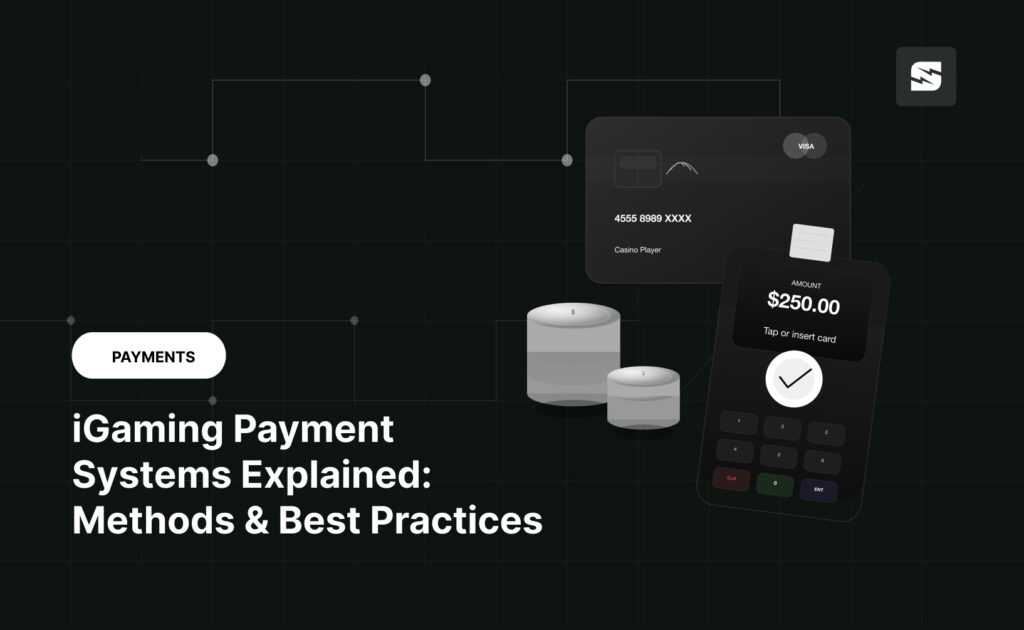
The world of iGaming is never quiet and always filled with action. If you manage an online casino, a betting website, or a poker club, the proper selection of payment systems is essential to the efficient operation of your business. Nowadays, it is important that money transfers are quick and that players experience no difficulties with deposits or withdrawals. The complexity of payment systems used for gambling sites is a key feature of these services.
While the variety of available payment methods has increased significantly in recent years, there are other factors to consider when selecting your preferred transaction processing method. This paper will examine the best payment systems, payment service providers, and commercial trends.
What Are iGaming Payment Solutions?
Payment solutions in the iGaming industry include software-based payment methods that enable players to deposit funds and withdraw their earnings on gaming sites.
It covers any transaction type, including credit cards, electronic wallets, wire transfers, cryptocurrency, and other payment methods. All these methods should adhere to AML and KYC policies.
What Makes iGaming Payments Different From Regular E-Commerce?
Transactions in the iGaming industry occur under circumstances unlike those of typical e-commerce transactions. This distinction is key to understanding what an entrepreneur needs to do in order to create a successful platform.
- Regulatory Complexity
The firms operating in this industry need to obtain unique gambling licenses in accordance with their jurisdiction's regulations, abide by anti-money laundering statutes, and conduct client verification procedures, among other requirements, which are not necessarily compulsory for traditional online stores.
- High-Risk Merchant Classification
Banks and payment systems classify companies operating in the iGaming sector as high-risk clients. Compared to regular online stores, this means higher payment processing fees, harsher contract terms, and a greater risk of account freezing or closure.
- Chargeback Exposure
Gaming platforms have higher refund rates than typical online merchants. Players can dispute payments after losing, creating both financial and reputational risks that require dedicated fraud-prevention tools to reduce.
Types of Payment Methods in iGaming
What matters is not just offering clients appropriate methods, but also understanding what the payments do and where they fit within the bigger picture of your payment system. The information is necessary to develop an iGaming platform that fulfills customer expectations in the markets you are working in.
Credit & debit cards
Bank cards remain the most common payment method in online gambling, supported by payment systems such as Visa and Mastercard.
How it works: 2021 The player enters their card details at checkout; the payment gateway forwards the transaction to the issuing bank for instant authorization, and the funds are credited upon approval.
E-wallets (Skrill, Neteller, PayPal)
Electronic wallets act as a digital mediator between the player's bank and the gaming platforms, making transactions more secure and, as a result, generally more private.
How it works: Players are authenticated via their e-wallet, after which funds are transferred instantly from their accounts to the operator's trading account.
Cryptocurrency & stablecoins
Decentralized currencies that enable borderless transactions and transaction reversals with a highly confidential user experience.
How it works: The platform generates a specific wallet address; the player sends cryptocurrency from their individual wallet, and the funds are credited once the transaction is confirmed by the blockchain.
Bank transfers & open banking
It is a very efficient method that transfers money instantly from the player’s bank account to the operator’s bank account, enabled by open banking technology.
How it works: facilitate the transaction, the player logs in to their bank’s secure interface and uses the regulated API to effect the transfer without entering any login details.
Prepaid vouchers & cards
An offline transaction involving an anonymity-based transaction method, in which a player purchases a prepaid voucher at a retail location or online and uses it to fund their account without requiring a bank transaction.
How it works: The player then enters a single-use PIN at the cashier's desk, where the transfer is processed.
Local & alternative payment methods
Regional payment solutions, such as iDEAL, UPI, Interac, and Boleto, align with players’ banking habits and market-specific infrastructures.
How it works: The platform routes the transaction through a local transactions gateway, the player undergoes authentication via their regional banking app or network, and funds are credited according to local processing times.
Comparison of Blockchain and Traditional Payment Systems — Which is Best?
Both options hold their pros and cons, and the decision will ultimately depend on your target market, license issues in a specific gaming license, and any other factors that may concern you. Below is a table to help you compare these two systems based on key considerations.
| Criteria | Traditional Payments | Blockchain Payments |
|---|---|---|
| Transaction Speed | 1–5 business days | Near-instant (seconds to minutes) |
| Processing Fees | Medium to high | Low to medium |
| Anonymity | Low | Medium to high |
| Regulatory Clarity | High | Still evolving |
| Fraud Risk | Medium | Low |
| Chargeback Risk | High | None |
| Player Adoption | Very high | Growing |
| Currency Volatility | Stable | Can be high |
| Cross-Border Support | Limited | Borderless |
| Integration Complexity | Low to medium | Medium to high |
How the iGaming Payment Process Works
The cash flow process in the iGaming system is essential data that both the provider and the gambler should know. As soon as a player chooses a deposit option, the funds flow process goes through several stages before reaching the player's account.
Player initiates a deposit
Players choose their preferred fee option and enter the deposit on the platform. Doing so initiates a secure transactions request, which is sent to the payment processing gateway for processing.
The payment gateway processes the request
The gateways receive transaction information and forward it to the relevant fee gateway provider or financial institution. The whole process takes place in microseconds, and the gateway acts as the keychain of communication between the user and the financial system.
Authorization & verification
Verification is handled by the card issuer or the payment gateway provider. They verify whether the player is a real user and has sufficient funds for the transaction. Verification also helps prevent fraud and money laundering.
Localization in igaming payments boosts players’ confidence to transact and consequently conversion rates. And helps iGaming operators increase revenue, cut integration and other costs, and improve business.
Funds are transferred
Following successful authorization, funds are moved from the player's account to the merchant account. Funds are transferred using encrypted communications protocols, protecting confidential personal and financial information at every stage.
Player balance updated instantly
The real-time validation process is handled by the payment gateway, and the money is credited to the player's account. An immediate update is necessary to maintain player confidence and ensure flawless gameplay.
Transaction logged & stored
All transaction details are captured in the platform's system to guarantee compliance with all compliance obligations. The data will be stored securely, enabling the operators to meet all compliance obligations and address any disputes.
Top iGaming Payment Providers Compared: Features, Fees & Fit
The fact that numerous fund transfer systems compete for attention makes the choice difficult. The following table compares the main payment systems in the iGaming industry based on several parameters.
| Provider | Supported Methods | Processing Fees | Settlement Speed | iGaming Focus | Best For |
|---|---|---|---|---|---|
| Nuvei | Cards, e-wallets, crypto, 200+ local APMs | Custom & negotiable based on volume | 1–3 business days | ✅ Dedicated | Large global operators needing a full-stack solution across multiple markets and currencies |
| Trustly | Open banking, direct bank transfer | Low to medium — cheaper than cards | Instant to 24 hours | ✅ Dedicated | EU-focused platforms seeking fast, secure bank payments without card fees or chargeback risk |
| PaySafeCard | Prepaid vouchers only | Medium — fixed per transaction | Instant deposit only | ✅ Dedicated | Platforms targeting privacy-conscious players or those without access to traditional banking |
| Skrill | E-wallet, cards, crypto, bank transfer | Low to medium — competitive rates | Instant to 24 hours | ✅ Dedicated | High-volume iGaming platforms requiring a trusted, multi-method wallet with global reach |
| Neteller | E-wallet, bank transfer, cards | Low to medium — tiered by volume | Instant to 24 hours | ✅ Dedicated | Operators serving international players who prefer a widely recognized gambling-friendly wallet |
| PayPal | E-wallet, debit & credit cards | Medium to high — standard retail rates | 1–3 business days | ⚠️ Selective | Licensed operators in regulated markets like the UK and select US states where PayPal is approved |
| Stripe | Cards, bank transfers, local APMs | Standard 1–2% per transaction | 2–7 business days | ⚠️ Limited | Low-risk licensed platforms in permitted jurisdictions where iGaming is explicitly approved by Stripe |
| CoinsPaid | Bitcoin, Ethereum, USDT, 30+ cryptos | Low — typically 0.5–1% per transaction | Near-instant on-chain confirmation | ✅ Dedicated | Crypto-native casinos and platforms targeting players in markets where traditional banking is restricted |
| Worldpay | Cards, APMs, e-wallets, bank transfer | Custom & negotiable — enterprise pricing | 1–3 business days | ⚠️ Selective | Enterprise-level operators requiring a globally recognized acquirer with deep multi-market expertise |
| Payone | Cards, SEPA, e-wallets, invoice | Medium — competitive European rates | 1–2 business days | ⚠️ Selective | European mid-size operators seeking a reliable SEPA-friendly acquirer with solid regional coverage |
How to Optimize Your iGaming Payment Stack
Creating a highly effective payment infrastructure is an ongoing process that involves analysis, discussion, and improvement. Now, let us take a look at the three main aspects of fund transfer infrastructure improvement that every online gambling operator should concentrate on.
Choosing the right mix of payment methods
Since there is no fund transfer system that caters to all customer segments, it is important for every iGaming website owner to ensure a wide range of payment options is available. An appropriate combination of payment systems will reduce abandoned orders and increase conversion rates.
Improving approval rates
A declined transaction equates to a lost player and, ultimately, a lost client for eternity. Collaborate with your fund transfer gateway to establish an intelligent routing mechanism that routes transactions to processors where the transaction will probably be approved.
Minimizing fees along with maximizing profit
Processing fees can reduce your profit margins without you being aware of their impact if you do not track your costs, particularly when you process many transactions each month. Get tailored rates from your processing companies based on your transactional volume and refund rate.
Common Payment Challenges in iGaming and How to Avoid Them
All casino software developers, no matter how large or experienced, will inevitably encounter some specific fund transfer problems. The following list illustrates the three most common payment problems in the online casino sector, along with the best practices operators should adopt to prevent them.
High dispute rates triggering account terminations
The simplest way for an operator to be stripped of the right to deal with the fund transfer processor is through an excessive number of chargebacks. For iGaming operators, disputes over losses are a common reason.
How to Avoid It: Implement proper methods of detecting fraud and observe transactions in real time to stop any instances of fraud from happening. Moreover, ensure you offer excellent customer support and address player complaints promptly.
Payment declines are killing conversion at the deposit step
The increased risk of deposit failure may pose an unseen threat to the financial gains of numerous online gambling enterprises. Gamblers who have trouble making deposits will simply switch to other gaming websites rather than repeatedly depositing their money.
How to Avoid It: Use smart fund transfer routing solutions that examine the player's transactions and direct them to the payment gateway with the highest likelihood of success.
Slow or failed withdrawals are destroying player trust and retention
Nothing shakes the confidence of a gambler like a withdrawal process that takes too long, gets stuck, or is without explanation. For the players, withdrawal speed is one way of measuring how fair and honest the gambling operator is.
How to Avoid It: Speed up the withdrawal process by automating transaction verification, setting reasonable withdrawal timelines, and making them known to your gamers. Give your gamers a range of payout options, including cryptocurrency fund transfers.
The Future of iGaming Payments: What's Coming in 2026–2027
Payment in the iGaming sector is evolving faster than ever before, driven by changes in regulatory conditions, new technologies, and increasingly high participant expectations. Here are the major trends guiding the industry's development in 2026–2027:
- Central Bank Digital Currencies (CBDCs)
- Instant Payment Networks
- AI-Powered Fraud Prevention
- Biometric Authentication
- Embedded & One-Click Payments
- Super App & Wallet Integration
Final thought
Companies that invest the time to understand payment systems, select appropriate payment service providers, and improve their entire payment ecosystem will undoubtedly enjoy a considerable advantage over those that fail to focus on payments. Be it credit cards, e-wallets, blockchain payments, or open banking, an optimal combination of payment methods can make your platform a powerful weapon in driving conversions and retaining clients. Develop your fund transfer system with the same care and thought you put into your product, and your platform will be guaranteed success for years to come.
FAQ
What is the best payment gateway for online casinos?
No fund transfer suits all purposes; your options will be determined by the specific regions you intend to operate in, licensing requirements, and your target players. The prominent players include PaySafe, Nuvei, and Trustly, which extend tailored fund transfer services for the iGaming sector and top-notch regulatory compliance capabilities. You must pay attention to factors such as supported currencies, chargebacks, and the types of payment methods allowed in different jurisdictions.
Can online casinos use PayPal?
However, some restrictions remain in place; PayPal applies very strict standards when selecting iGaming operators to partner with. Only operators holding a valid license in regulated territories such as the UK, Germany, and certain U.S. states can use this payment service. An operator must comply with all of PayPal’s requirements and demonstrate a clean transaction history to be eligible to accept PayPal fund transfers.
How long do iGaming payment settlements take?
The time required to process fund transfers in the iGaming industry depends on the fund transfer methods players choose. For instance, e-wallet and cryptocurrency transactions typically take the shortest time, since they can be completed within 1 day. However, full fund transfers via cards can take between 2 and 7 days to process.
Do I need a separate payment license to accept gambling payments?
In most cases, one must obtain a gambling operation license, which also includes permission to accept payments from bettors; however, one may not need a separate payment processing license. However, if your plans include developing an in-house payment system or serving as a payment facilitator, you may need additional licenses. Therefore, consult a legal expert before reaching any conclusions about your licensing needs.
Launch Faster with the Right Payment Infrastructure
We help you optimize deposit flows, enable instant withdrawals, and create seamless user experiences that keep players coming back.